In person · Bolton BL1
Face-to-face counselling in Bolton
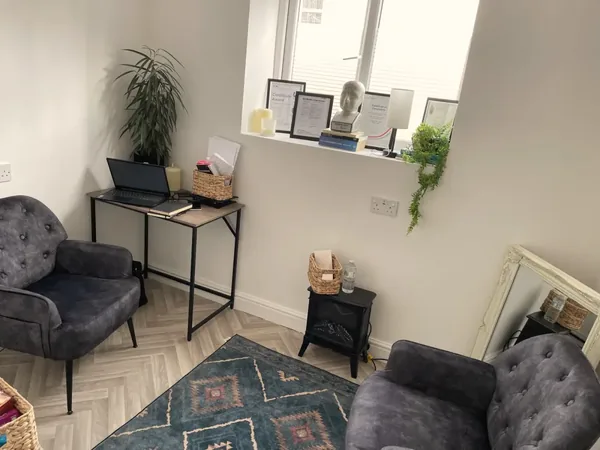
A private, quiet room at Douglas House on Belmont Road, with free parking nearby. Press button 3 when you arrive.
Visiting the room
Transactional Analysis (TA) is a talking therapy that explores your personality and how it has been shaped by your experiences. I use it with adults at Douglas House in Bolton and online, to make sense of the patterns that keep repeating and find more choice in how you respond.
It can sound complicated. In practice, it gives us a simple, shared language, and I explain it as we go. You don’t need to know anything about TA to start.
What it is
TA can sound complicated at first, but I introduce the ideas gradually so you can understand and use them as we go.
Transactional Analysis was developed by Eric Berne and is used in counselling, psychotherapy, education and organisations.
At its heart is a simple idea. We each carry ways of thinking, feeling and behaving that formed earlier in life, often as sensible ways of getting by. Some still serve us well. Others can keep us stuck in reactions and relationships that no longer fit.
In my counselling work, TA is a way of exploring your personality and how your individual experiences have shaped it, so that old patterns become easier to recognise.
For a general introduction, see the International Transactional Analysis Association’s overview.
Ego states
TA describes three “ego states”: three ways of thinking, feeling and behaving that we all move between. Everyone has all three, and none of them is good or bad.
The ways of thinking and behaving we took on from the people who looked after us: the rules, expectations, criticism and care.
Often heard as “you should…” or “you must…”
The grounded, here-and-now part of us that can weigh things up, make informed decisions and set boundaries. It can help us pause, weigh up what is happening now and choose how we respond.
Noticing what’s happening, and choosing a response
The feelings and reactions we carry from earlier in life: curiosity, playfulness and creativity, but also fear. Something small today can put us straight back there.
How someone might describe it: “This experience today put me into my Child… I felt fearful and scared.”
Patterns
Growing up, we can pick up messages about how to be, often without anyone saying them out loud. TA calls some of these “injunctions”, such as:
Many of us also develop “drivers”: habits we fall back on to feel acceptable. As I put it:
“We do all these things because we’re searching to be liked.”Andrea Long
Not everyone has the same patterns, and these aren’t diagnoses. They’re simply a way of noticing what you do, so you have more choice about it.
Understanding, not blame
Most patterns started for understandable reasons, often as the best way of coping at the time.
Looking at where a pattern began isn’t about blaming your parents, your past or yourself. The focus in TA is on what you notice now, and on what you would like to do differently.
In sessions
You don’t need to arrive with a topic. We can begin with something ordinary that happened that day, which can tell us a lot about how you cope.
I bring TA ideas into our sessions when they’re useful, so you can begin recognising the patterns for yourself.
Say a short message from your manager leaves you on edge for the rest of the day. We might start there: what you felt, what you told yourself, and what you did next. You may notice a critical voice saying you should have done better, or a younger, anxious part of you reacting. Naming that can be the first step towards responding from your Adult instead.
A hypothetical example, not a client’s story.Over time
One way I use TA is to help you notice which ego state may be shaping your response. That awareness can create more room to pause, consider what is happening now and choose how you respond, for example:
This is a process rather than a quick fix, and it won’t look the same for everyone. TA is my way of working, not a diagnosis or a guaranteed solution.
A first step
You don’t need to know anything about TA beforehand. In the free introductory call I’ll explain a little about how I use it, answer your questions, and we can both see whether working together feels right.
Prefer to start with a message? WhatsApp me
Ways to meet
In person · Bolton BL1
A private, quiet room at Douglas House on Belmont Road, with free parking nearby. Press button 3 when you arrive.
Anywhere in the UK
The same approach, by video, for adults anywhere in the UK, at the same £50 fee.
Explore online sessionsOutdoors
Talking side by side outdoors can suit some people. We agree a location in advance, weather permitting.
Explore walking sessions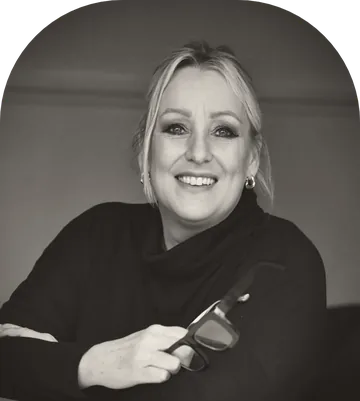
Who you’ll be talking to
I’m a BACP-registered counsellor and psychotherapist (MBACP 414595). I work using Transactional Analysis and see adults in Bolton, online and outdoors.
Part of what I value about TA is that clients can learn its ideas as we go, and begin to use them in their own lives.
Questions
For general questions about starting counselling, see what to expect.
Transactional Analysis (TA) is a talking therapy, developed by Eric Berne, that looks at how your personality and patterns have been shaped by your experiences, using ideas such as Parent, Adult and Child. It’s the approach I use in counselling to help you notice those patterns and find more choice in how you respond.
No. You don’t need to read anything or learn any terms beforehand. I explain the ideas as we go, only where they’re useful, and many people find they start using them in everyday life.
In TA, injunctions are early messages about how to be, often picked up without anyone saying them out loud, such as “don’t feel” or “don’t be you”. TA writers describe a number of common injunctions. In counselling we only look at the ones that feel relevant to you, and they’re never used as labels.
Each approach has its own focus. TA pays particular attention to patterns that began earlier in life, the different ego states we move between, and how we relate to other people. It isn’t better or worse than other approaches. What matters most is whether the approach, and your relationship with your counsellor, feel right for you.
It can be one way of working with both, by looking at the patterns and early messages that may be involved. Everyone is different, so I can’t promise particular results. You can read more about support with anxiety and counselling after a bereavement.
Yes. Online sessions use the same approach and are available to adults anywhere in the UK, at the same £50 fee as face-to-face sessions. More about Online Counselling
Sessions are £50 for 60 minutes, in person, online or outdoors, and the introductory call is free. You can pay by card, bank transfer or cash. I ask for 24 hours’ notice if you need to cancel; cancellations with less than 24 hours’ notice and missed appointments are charged at £25.
Getting in touch
Send me a WhatsApp message to arrange a free introductory call. You don’t need to know anything about Transactional Analysis to get in touch; a sentence is plenty.
Douglas House, 196 Belmont Road, Bolton BL1 7ARPress button 3 when you arrive. Free parking around the building.